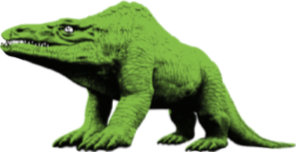
Our past board members and project partners have contributed significantly to the success of FCPD. Thanks to each and every one for their input!
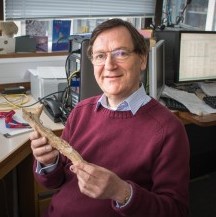
I am a palaeontologist specialising in the fossil mammals of the Quaternary ice ages. I taught palaeontology and evolutionary biology at UCL for many years before joining the Natural History Museum in 2007. For several years I have researched the fossil mammals discovered by Darwin in South America, that were subsequently studied and named by Richard Owen in the 1830s-1840s. This has led to a fascination with this critical period in the history of palaeontology and Owen’s part it in, a period preserved in time, as it were, in the Crystal Palace Dinosaurs.
As a mammal specialist I am also at pains to point out that some of the statues are only honorary ‘dinosaurs’, including the giant sloth Megatherium, with Owen’s interpretation of it (then new, but still considered valid) as supported on a tripod of its hind legs and tail; and the ‘Irish Elk’ Megaloceros, with its magnificent antlers, which has special meaning for me as it was the subject of my PhD work. These treasures have to preserved – and that is our commitment as the Friends of Crystal Palace Dinosaurs.
nhm.ac.uk/our-science/departments-and-staff/staff-directory/adrian-lister.html
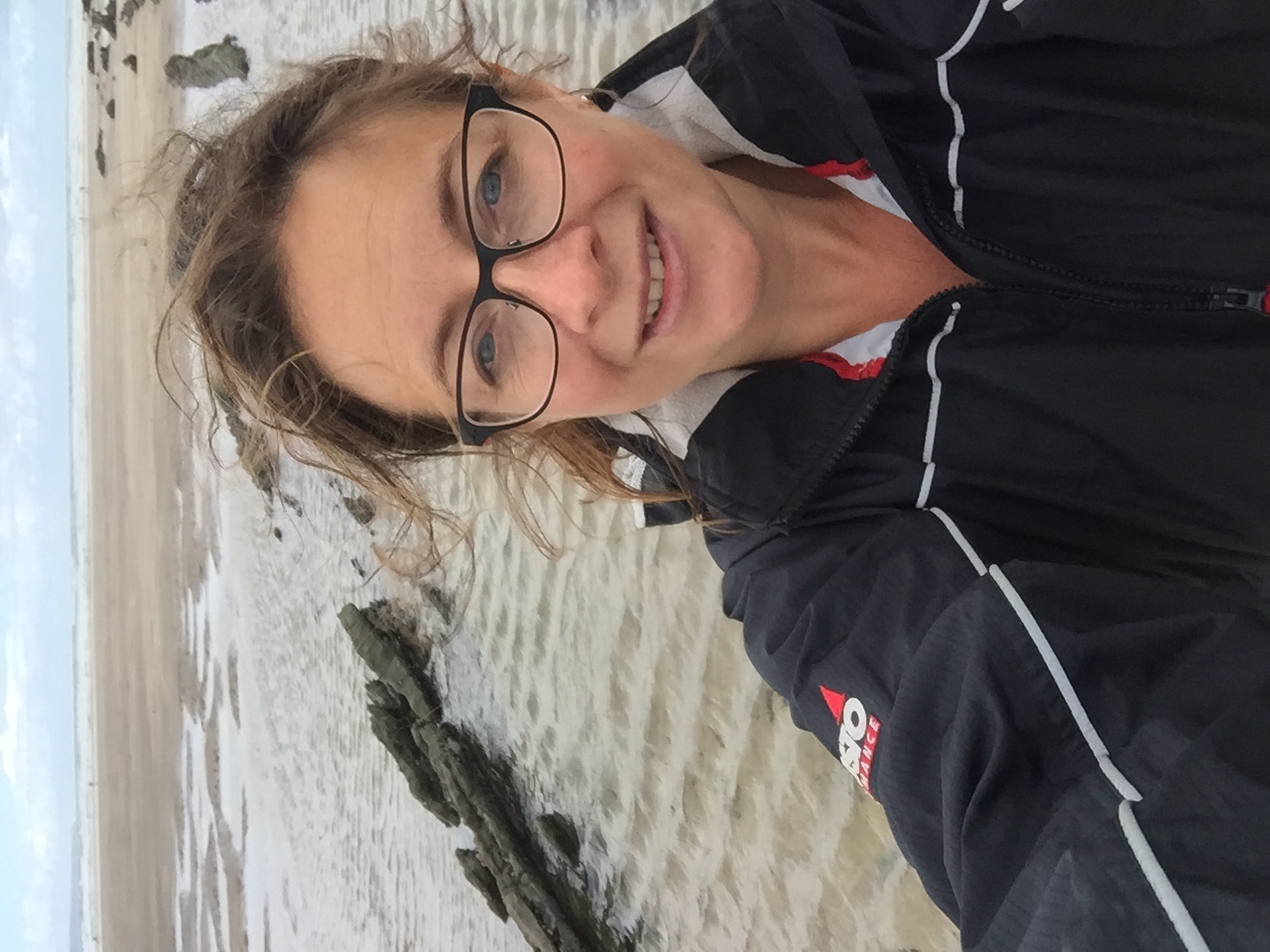
I was formerly project director of Jurassica, an attempt to recreate a vast immersive Mesozoic environment under a huge glass roof designed by Renzo Piano, aiming to engage the public with deep time and the big ideas of science past and present. I live in a house full of dinosaurs and rocks and wish I had been a geologist.
Instead, I am a cultural sector professional specialising in project management, business planning, and impact evaluation. I am also a doctoral researcher at Bournemouth University and am interested in public engagement in museums.
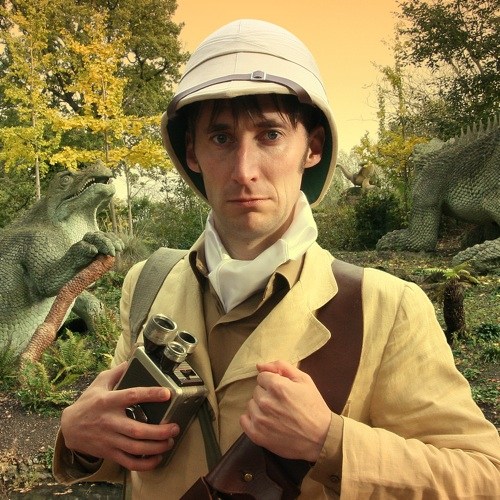
I’m a tour guide for Shakespeare’s Globe Theatre and English Heritage; a voiceover artist for Travel Channel and Sony; and an online documentary maker featuring on londonist.com. While producing my ‘Lost Valley of London‘ adventure series, I became utterly enamoured with the Crystal Palace Dinosaurs. To me these sculptures represent everything unexpected, mysterious and exciting about London heritage: the thrill of discovery, the wild-ride of history and the inspiration of human endeavour. I am honoured to join the Friends of Crystal Palace Dinosaurs and promote these magnificent beasts’ conservation.
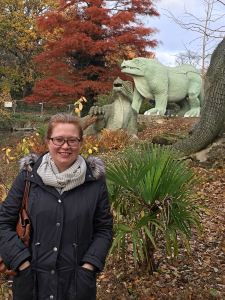
I’ve lived in Crystal Palace for nearly 14 years. I have a passionate interest in history and love walking and spending time outdoors, so it is perhaps not surprising that I loved the Dinosaurs from the first time I saw them.
I’m fascinated by the history of the sculptures and how they represent a particular moment in the history of science, but perhaps more so I love the way that they’ve come to represent our local community – a symbol of our past (the Crystal Palace itself) – our present and our future (I love all the kids running around, roaring and telling people all about them!)
They can only be part of the future if we look after them now, though, which is why I volunteer with FCPD – we need to make sure that the Dinosaurs survive the next 170 years!
Dinosaurs dominated my childhood reading and viewing habits – from the creatures of Conan Doyle’s Lost World and Edgar Rice Burroughs Pellucidar/At the Earth’s Core, to the Savage Land of Marvel Comic’s Ka-Za and the wonderful stop-frame animated creations of Ray Harryhausen (The Valley Of Gwangi left an indelible mark with its mind-blowing combination of jerk-motion Triceratops and live action cowboys…). They fed endlessly into my imagination and stoked my creative appetite for realising the impossible… so there’s a nice sense of completion in that my most recent art project – Ghosts of Gone Birds – set about the task of breathing life back into all the extinct bird species we have lost over the last 250 years through the imaginative power of painters, sculptors, poets and writers. Art vs. Extinction seems a fairly worthy fight to undertake. And when I’m not curating the resurrection of Laughing Owls and Red-Moustached Fruit Doves, I like to dedicate my creative energies to any other cause-related communications project that seems to challenge the usual way of the world – like staging music festivals inside book stores, opening up empty art galleries or reinventing Peanuts for the C21st.

I work in postgraduate medical training and sporadically as a freelance journalist. I am a huge fan of the Crystal Palace Dinosaurs and love that they are a snapshot in time and an incredible insight into the history of scientific thought.
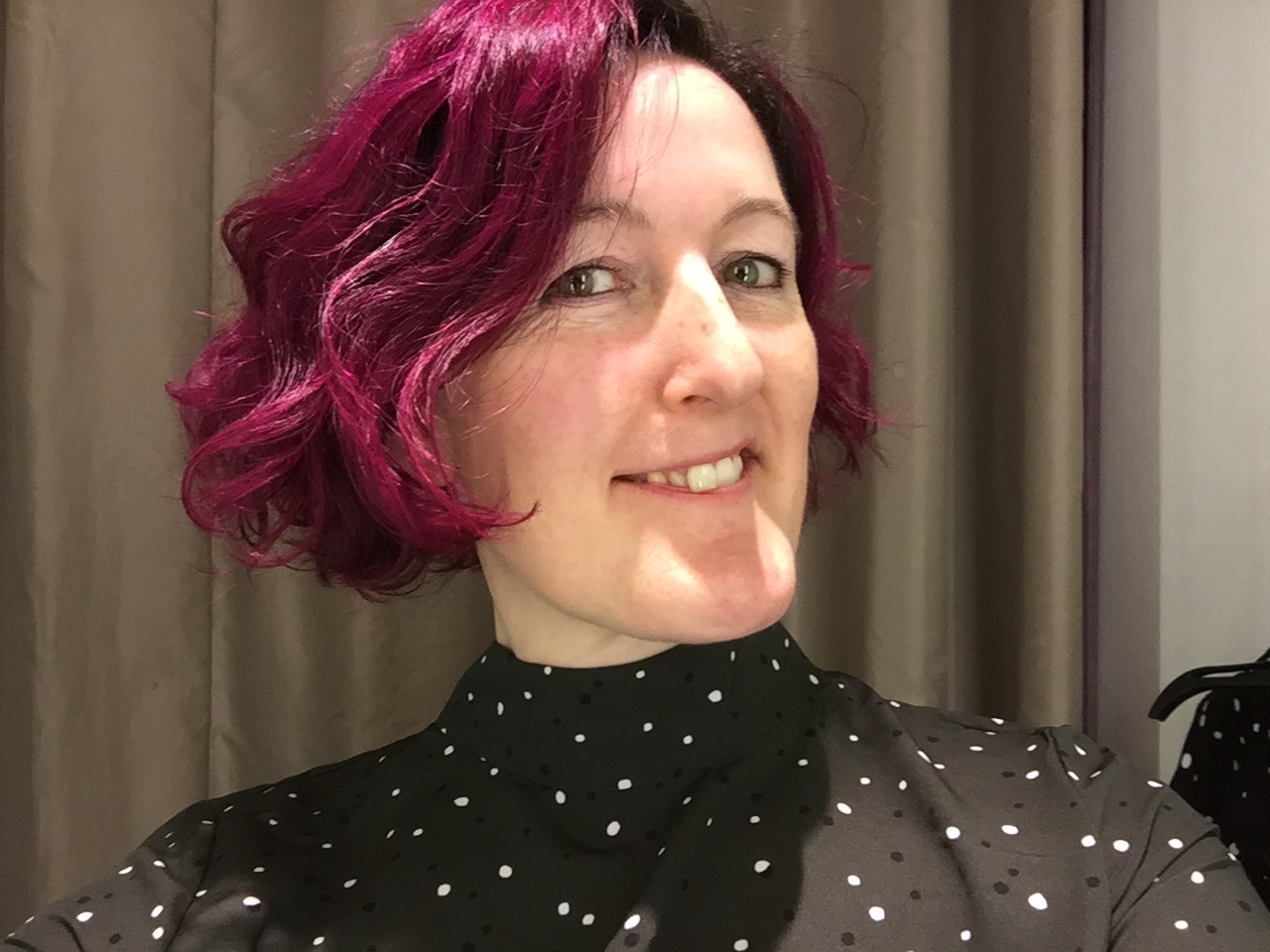
I’m delighted to be joining the trustees to help ensure generations more can enjoy our gorgeous dinosaurs, as I have throughout my life.
No school holiday was complete without a visit to the dinosaurs, and as a proud Penge resident (formerly Sydenham, Bradford and Moscow), I have visited them daily throughout the pandemic. You know, just to check they’re okay… which the Meg suddenly wasn’t one morning. So here I am.
My day job is Chief Executive & Artistic Director of Bishopsgate Institute. Our archives celebrate neglected stories and anyone is welcome to access them. Before that, I worked on the London 2012 Cultural Olympiad, ran the British Council’s arts programme across Russia and was executive DJ at Propaganda in Moscow. I’m also a proud trustee of the London Musical Theatre Orchestra, a keen (if irregular) ballroom and swing dancer, and a regular performer with Geoids Musical Theatre and Sedos.
I’m a local with a passion for all things dino-related, and the Crystal Palace Dinosaurs in particular. I’m an ultra-running enthusiast and spend half my waking hours plodding past our dinos in the park, as well as tipping my hat to their pals the sphinxes up the hill.
I first heard about the Crystal Palace Dinosaurs in The Usbourne Book of Ghosts, Monsters and Legends when I was a kid, and have been fascinated with them ever since. They’re not just utterly charming to see, but to me they represent the deep eccentricity of the British, and the have-a-go mentality of the Victorian era. Did Benjamin Waterhouse Hawkins and Sir Richard Owen know exactly what iguanodons and megalosaurs looked like when they came up with the statues? No, but they gave it their best shot. Their Dinosaur statues are the spirit of the scientific method – the workings left behind for everyone to see even after the problem has been found to have a different solution.
I want our incredible Dinosaurs to be celebrated for the superstars of science that they are, and for the statues to be looked after and cherished for centuries to come.

I have a background as a researcher, primarily at ZSL and the Natural History Museum, working on late Quaternary mammal extinctions. The various sculptures that make up the Crystal Palace ‘Dinosaurs’ have therefore always been a source of fascination, in particular the perhaps lesser-known Ice Age mammals: the extinct giant deer Megaloceros giganteus and giant ground sloth Megatherium americanum. The importance of these Grade-1 listed sculptures as the first life-sized reconstructions of extinct animals in the history of science, education and entertainment cannot be over-stated.
More personally, I grew up in and around Penge, and Crystal Palace Park and its Dinosaurs have been a captivating and comforting backdrop for weekend walks with friends and family, attempts to keep fit and nearly every day pushing my young son around whilst on maternity leave.
I am thrilled to form part of a dedicated team to help protect, promote and conserve them.
https://www.nhm.ac.uk/our-science/departments-and-staff/staff-directory/jennifer-crees.html

A northerner at heart, I moved from elsewhere in South London to Penge in 2019 and immediately fell in love with the dinosaurs. I am constantly amazed when I think about how many others have looked up from those paths, and wondered about what the world was like before us.
During the workweek, I am a Managing Director for a startup focused on working with clients and organisations looking to address critical health inequality issues, here in the UK and around the world. I am a Communications Director by specialism, moving into health and science comms after starting life as a journalist. I’ve advised companies like Pfizer, the NHS, AstraZeneca, Women’s Aid, and Danone on how to achieve impact with their engagement.
I am looking forward to ensuring everyone is able to enjoy this fantastic heritage site now and for generations to come. Our understanding of science, art and history is the basis from which we form new ideas and challenge our assumptions. And… who doesn’t love a dinosaur?!
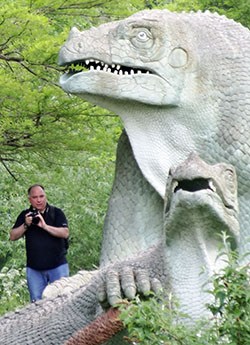
I’m a university professor with expertise in the history of evolutionary biology and palaeontology. This includes Darwin and Darwinism. I’m fascinated with the period 1800-1850, when British geologists led the world in thinking about “deep time” – the idea that Earth has a long history, and fossils are bits from previous chapters in that history. This takes history far beyond science, into questions about the meaning and purpose of life on Earth. Indeed, the statues in Crystal Palace Park spoke to those questions as much as they illustrated some of the most exciting new discoveries of science in their day.
I’m a passionate advocate for the Crystal Palace Dinosaurs. In my day job, I’m Professor of History and Philosophy of Biology at University College London and Head of Department for UCL’s Department of Science and Technology Studies.
I was a Crystal Palace local. The park and its cultural heritage are close to my heart. I’m delighted to do my bit to help conserve them and to promote thinking about the questions they raise.
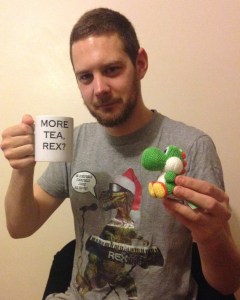
I am a museum education professional, currently working at The Grant Museum of Zoology and Brooklands Museum, and serving on the board of the London Museums Group. The reason I got into museums and heritage as a career is due to a genuine love of interpreting history and the view that you need to enjoy your job otherwise you’re wasting you time – a thought process that was initially stoked age 5 by Dinosaurs.
The first time I read about the Crystal Palace Dinosaurs was in a magazine in 1991 (appropriately called ‘Dinosaurs!‘), which featured cartoons about palaeontological history, including of course the Crystal Palace sculptures. Being a Londoner myself I found their nearby locality fascinating, as well as the window it gave me into scientific interpretation in the Victorian times. Fired by that same interest for well over a decade, I later worked at several dinosaur museums and exhibitions, gained qualifications in Prehistoric Archaeology and Museum Studies, and worked my way through the sector to the point where I can now help to actively contribute to the maintenance, interpretation and public enjoyment of the sculptures.

I joined Friends of Crystal Palace Dinosaurs because I want to make sure that our local community assets are properly looked after. I was also Chair of the Friends of Crystal Palace Subway, a related heritage project in Crystal Palace Park, and CEO of EngagedX, a company developing market infrastructure to unlock more socially motivated investment.
karlhrichter.com
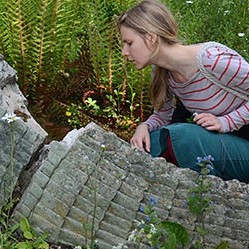
I am an objects conservator experienced with hands-on conservation of inorganic materials, conservation methodology and material science. I am looking forward to helping with their preservation, which should make for an interesting challenge! Living just round the corner from the dinosaurs I see them almost daily, yet cannot imagine ever tiring of them.
I have previously worked at the Natural History Museum, the British Museum and the Imperial War Museum and am currently a preventive conservator at the National Maritime Museum, Greenwich. From 2010 to 2012 I was on the committee of the Institute of Conservation’s Ceramics and Glass Conservation Group and since 2009 I have given two annual lectures to conservation students at UCL’s Institute of Archaeology. I have also been lucky to work as an excavation conservator in Tell Brak, Syria with the McDonald Institute, University of Cambridge.
Examples of my previous conservation projects include the ‘Blaschka Glass Models’ at the Natural History Museum and the Neolithic Statues of ‘Ain Ghazal at the Institute of Archaeology.
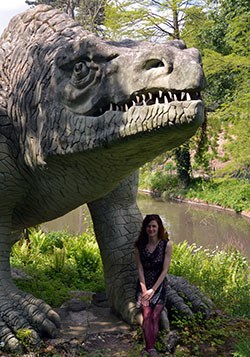
I am Communications and Web Coordinator for Autograph ABP.

I’m a senior arts administrator with over 15 years of working in the public sector including significant experience of funding and managing major arts Lottery-funded building projects as a key member of Arts Council England’s Capital team. As such, I’ve worked closely with English Heritage, CABE (Commission for Architecture and the Built Environment), Heritage Lottery Fund, regional funding agencies and local authorities on a range of heritage and cultural capital projects.
I’ve lived in the Crystal Palace area – only metres from the Lower Lake area of the park – for the past eight years and the longer I live here, the more I love the place and the people. Coincidentally, I also have links with Lyme Regis and the wonderful, dinosaur-centric Jurassic Coast through my family and being a trustee for a brilliant SW-based theatre company, Shanty Theatre.
So when I heard about the Friends of Crystal Palace Dinosaurs, I was very excited to combine my interests, skills and enthusiasm and work with a hugely knowledgeable and talented team in the conservation and promotion of a major local cultural and historical asset – the CP dinosaurs!
I am the curator of the Grant Museum of Zoology, UCL and I have had a lifelong interest in palaeobiology and evolution. You can’t tell the history of evolution, science communication and palaeontology without the story of the Crystal Palace dinosaurs. In fact, you could argue that none of these disciplines would be as they are today were it not for the dinosaur court down at Crystal Place. Fortunately, these sculptures still exist so that the history of paleontological thought, with an emphasis on Britain’s contribution can be shown, not just taught. Because of their impressive stature and size it’s assumed that they are robust objects but at over 150 years of being on open display they need preserving and conserving as much as museum specimens. Seen today they may appear to hilarious outdated and old fashioned but these sculptures have more to tell us about the history, development and communication of science if you know where to look closely and carefully.
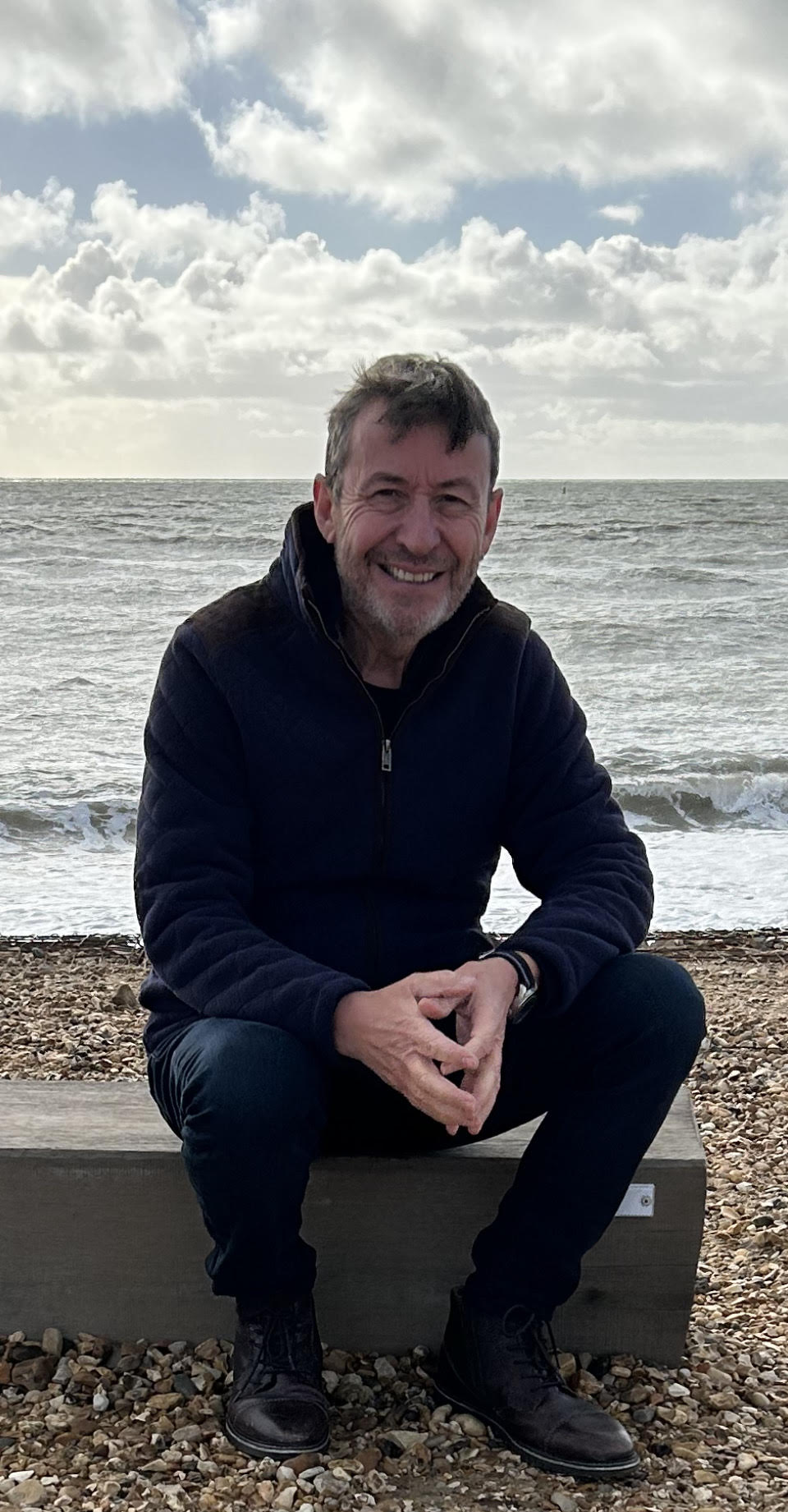
I have worked in London and it’s Boroughs for 45 years on its Listed Buildings, Bridges and Structures, including the Dinosaurs in Crystal Palace Park. My clients have mainly been in the public sector, which has given me valuable experience of their processes and procedures. I have worked with Joint Ventures and created innovative collaborations to deliver term contracts in Building Maintenance, Highways, Bridges and Social housing.
Having been a London Borough of Bromley resident for 24 years I am also very familiar with Crystal Palace and its surroundings from a personal perspective. I am now retired and living in Westerham, Kent.
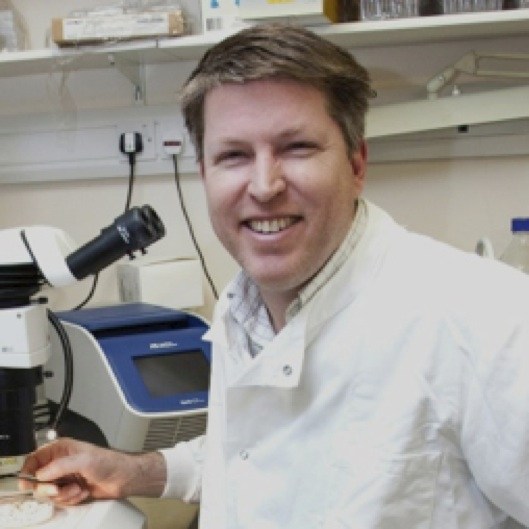
I am a biologist at the Natural History Museum in London where my group works on the evolution of parasitic worms through the study of their development, genomes and diversity. Although I’ve never specialised on dinosaurs, they have inspired me since childhood and were my first true fascination with the animal world outside of my immediate surroundings. Combined with an interest in the history of evolutionary thinking, a career at the NHM and a home in south London, the CP Dinosaurs are linked in some way to all parts of my life and I was delighted to join the Friends’ board in order to assist with their conservation efforts. The sculptures are a unique and important heritage asset worth preserving for future generations that provide not only a physical example of the very distant past, but also of Victorian natural science in its height of discovery. Through the Friends, I hope more people learn to appreciate the specialness of these installations and how they are linked to the Natural History Museum through its founder Richard Owen, to the British Empire through the spectacle of the Crystal Palace, and of course to palaeontology and the study of deep time.
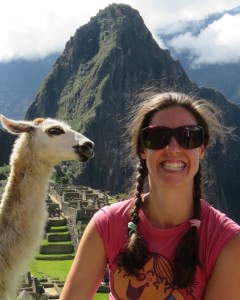
I’m a local resident with an enthusiasm for history, and for volunteering within the community. Both sets of grandparents lived in Sydenham and Penge so the dinosaurs have been a part of my life since birth.
I am keen to help the charity expand upon the ways in which we can bring greater understanding of the historical significance of the Dinosaurs to a wider audience. I want to convey excitement about the statues in a way that inspires others to investigate for themselves.
One of my favourite things about the Dinosaurs is imagining the impact they must have had upon a society that had not yet been exposed to any notion that such creatures had existed. Richard Owen (the man who gave us the name dinosaur) realised the sculptures were a way to bring scientific knowledge to the masses. I like to think of an unsuspecting member of the public, going for a wander in the park and finding pre-historic beasts lurking in the trees!
The fact that the Dinosaurs are anatomically incorrect makes them all the more charming, and highlights the speed at which scientific development moves.
I am utterly thrilled to be a part of this important charity, and I wholeheartedly accept the challenge of assisting to preserve and promote the distinguished, delightful, divine Dinosaurs!
TriSarahTops

I’m a North London expat who relocated to SE19 in 2022, I had zero knowledge of the Dinos until moving here! That first summer I had a wonderful time at Dino Day and approached the volunteers to see if I could get involved as a way to learn about the sculptures and meet people in the area. The stars aligned, and with a theatrical puff of smoke I transformed into Treasurer and Trustee of FCPD! I am proud and excited to be part of this charity and to help protect the Dinos for generations to come.
I am a scientist by training specialising in viruses. Realising I was never going to win the Nobel Prize I moved away from the bench and into research management. I have experience of budget setting and management of high value grants and business cases (in the £millions). I know my way around an excel spreadsheet and love processes - hopefully the right set of skills to be treasurer!
In my spare time I can be found running around Crystal Palace Park or drinking too many coffees up on the Triangle.
Registered Charity 1165231 (England and Wales)
© Copyright Friends of Crystal Palace Dinosaurs, 2013-2026. Privacy policy.
Hosted on a server powered by 100% renewable energy.
 Follow us on Bluesky
 Like us on Facebook